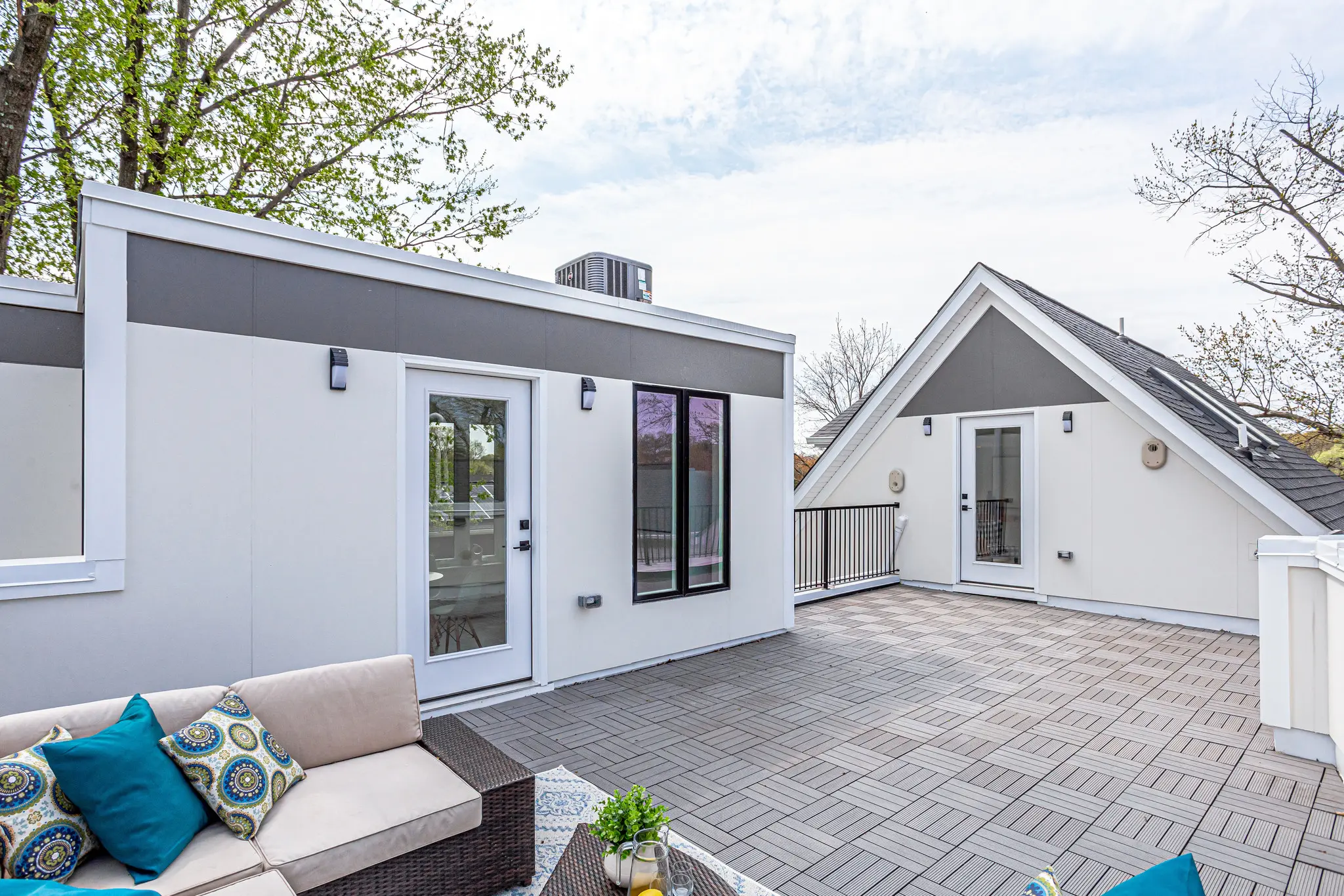
Flat Roofs on DC Rowhouses: Repair or Replace?
Most DC rowhouses have a low-slope “flat” roof hidden behind a cornice or parapet, covered with a continuous membrane: modified bitumen, built-up roofing, EPDM rubber or TPO. Repair isolated leaks at seams, flashing and drains; replace when the membrane is failing across the roof, and add insulation and a reflective cool-roof surface when you do.
Our project
What is a flat roof?
It isn’t quite flat: a low-slope roof falls gently to a drain, scupper or gutter. The DC Historic Preservation Review Board notes that most rowhouses have inconspicuous flat roofs, usually behind a cornice, parapet or pent roof, framed in wood. Because water drains slowly, the covering has to be a continuous waterproof membrane rather than overlapping shingles.
Which membrane?
The Cool Roof Rating Council groups low-slope roofing into a few families:
- Modified bitumen. Asphalt-based sheets, torched, mechanically fastened or adhered in place.
- Built-up roofing. Layers of asphalt and felt, usually finished with gravel or a cap sheet.
- EPDM (“rubber roofing”). A single-ply synthetic rubber sheet, seamed with adhesive or tape.
- TPO and PVC. Single-ply thermoplastic sheets with seams welded by hot air.
- Fluid-applied membranes and coatings. Liquids that cure into a seamless layer, sometimes used to extend a sound roof’s life.
The right one depends on the roof deck, what’s up there (a deck, solar panels, equipment), the drainage and the budget. We recommend one after looking at the roof.
Where do flat roofs leak?
- Where the roof meets the parapet walls, at the flashing.
- At seams, especially in older membranes.
- Around drains and scuppers that clog or pull away.
- Around skylights, vents, hatches and anything bolted through the roof.
- Where water ponds and doesn’t drain.
Repair or replace?
One leak at a flashing or a seam on an otherwise sound membrane is a repair. Widespread cracking, blistering, soft spots in the deck, or a roof that has been patched again and again point to replacement. So does wet insulation or rotten decking under the membrane, which is common when a leak has gone on for years.
Water damage rarely stops at the roof. One client’s roof had to be gutted and rebuilt after 30 years of leaks; we then came back to repair the second floor. Read his story.
Cool roofs and insulation
Replacement is the moment to improve the roof. The review board’s sustainability guide recommends a cool-roof membrane and adding roof insulation as part of a roofing replacement, and the EPA lists reflective single-ply membranes, coatings and light-coloured surfaces among low-slope cool roof options. On a flat roof hidden behind a parapet, a light colour doesn’t change how the street looks.
Permits and historic districts
In DC, replacing roofing in kind doesn’t need a building permit outside historic districts. Inside one, it is minor work the Historic Preservation Office typically approves the same day. A new roof deck is different: one not visible from the street gets staff review, and one visible from a street goes to the review board.
Quick answers
Can I walk on my flat roof?
Not on most membranes as a habit. If you want to use the roof, a deck built over the membrane, with the right permits and review, protects it.
Will a new roof fix my ceiling stains?
The roof stops new water. Stained or damaged ceilings and walls need repairing separately; we do both.
What can I check myself?
From a window or a safe vantage point only: ponding water, debris in drains, loose flashing. Please don’t climb onto the roof.
Where to go from here
- Roof repair and replacement
- Client story: a roof rebuilt on a house from 1900
- Renovating a DC rowhouse
- Water damage repairs
Sources
- DC Historic Preservation Review Board: Sustainability Guide
- Cool Roof Rating Council: Low-sloped roofing product types
- EPA: Using cool roofs to reduce heat islands
- DC Department of Buildings: How to Get a Permit
- DC Office of Planning: Non-Permit and Minor Permit Work
- DC Office of Planning: Work Requiring Full Staff or HPRB Review
Talk to us
What would youlike to change?
The first visit and estimate are free.